




Strategic Fiscal Navigation for Prague Residents: Maximizing Daily Transactional Value
Navigating the financial landscape of a vibrant city like Prague requires strategic thinking, especially for residents aiming for optimal daily transactional value. This comprehensive guide is designed to empower general Prague residents with the knowledge and tools needed for effective Prague Spending Optimization, ensuring their hard-earned money goes further and contributes to their overall financial well-being. From understanding the nuances of the local economy to leveraging cutting-edge financial technologies, we will explore every facet of fiscal management in the Czech capital. By implementing the strategies outlined here, residents can confidently make informed financial decisions, mitigate risks, and build a secure financial future in Prague.# I. Understanding Your Financial Landscape in Prague
This section will provide a foundational understanding of the economic environment in Prague, emphasizing the unique factors that influence daily spending and financial decisions for residents. A clear grasp of these dynamics is the first step towards achieving effective financial management and maximizing every koruna spent.# A. Cost of Living Dynamics in Prague
Prague, a city renowned for its beauty and rich history, also presents a distinctive cost of living profile that residents must understand. While often perceived as more affordable than Western European capitals, certain expenditures can add up quickly, necessitating careful budgeting and strategic planning. This overview will dissect the various components of daily expenses, providing a clearer picture for residents.
Sisukord
- Strategic Fiscal Navigation for Prague Residents: Maximizing Daily Transactional Value
- # I. Understanding Your Financial Landscape in Prague
- # A. Cost of Living Dynamics in Prague
- Sisukord
- # B. Local Banking and Payment Ecosystem
- # II. Smart Strategies for Daily Transactional Value
- # A. Optimizing Everyday Purchases and Services
- # B. Navigating Currency Exchange and International Transactions
- # III. Leveraging Technology and Financial Tools for Efficiency
- # A. Budgeting and Expense Tracking Applications
- # B. Digital Banking and Payment Innovations
- # IV. Long-Term Fiscal Planning and Protection
- # A. Building Financial Resilience and Savings
- # B. Protecting Your Finances and Avoiding Pitfalls
An overview of average living expenses reveals a mixed bag for Prague residents. Housing, particularly in the city center or desirable districts, constitutes the largest single expense, with rents for apartments varying significantly based on size, location, and amenities. Utilities, including electricity, gas, water, and internet, are relatively stable but can fluctuate with seasonal usage and provider tariffs. Groceries, while generally more affordable than in some Western European countries, require smart shopping choices to keep costs down. Transportation, thanks to Prague’s excellent public transport network, can be managed efficiently with the right passes.
When comparing Prague’s cost of living with other major European cities, a nuanced picture emerges. While significantly more affordable than London, Paris, or Zurich, Prague can be on par with or even slightly more expensive than some cities in Central and Eastern Europe, especially when factoring in discretionary spending. For instance, dining out, while offering excellent value compared to Western counterparts, can still impact a budget if done frequently. Understanding these relative costs helps residents benchmark their spending and identify areas for potential savings.
Identifying key expenditure categories for typical households is crucial for effective budgeting. Beyond housing and utilities, significant portions of a household’s income often go towards food, transportation, healthcare (though largely covered by the public system, some private services or medications incur costs), and leisure activities. Families with children will also factor in childcare and education expenses, which can vary widely depending on whether public or private institutions are chosen. A detailed breakdown of these categories allows residents to allocate their funds more effectively and track their spending habits.
The impact of inflation and broader economic trends on daily costs is a constant factor that Prague residents must monitor. Recent years have seen varying levels of inflation, affecting everything from grocery prices to utility bills. Understanding how these macroeconomic forces translate into personal spending is vital for adapting budgets and maintaining purchasing power. Staying informed about economic forecasts and government policies can help residents anticipate changes and adjust their financial strategies accordingly.
# B. Local Banking and Payment Ecosystem
Navigating the local banking and payment ecosystem is fundamental for any resident in Prague. The Czech Republic offers a modern and evolving financial landscape, with various options available for managing daily transactions. Making informed choices about banks and payment methods can significantly enhance convenience and minimize fees.
Exploring common banking options for residents reveals a mix of established local banks and a growing presence of international institutions. Czech banks like Česká spořitelna, Komerční banka, and ČSOB are dominant, offering comprehensive services, extensive ATM networks, and often, customer support in English. International banks such as Raiffeisenbank and UniCredit Bank also operate in Prague, potentially appealing to expatriates or those with existing accounts abroad. Each bank offers different account packages, fee structures, and benefits, making comparison essential for finding the best fit.
Understanding payment methods prevalent in Prague is key to seamless daily transactions. Card payments, particularly contactless, are widely accepted across supermarkets, restaurants, and shops, making them a highly convenient option. Mobile payment solutions like Apple Pay and Google Pay are also gaining traction, offering an even faster and more secure way to pay. While cash usage has declined, it remains relevant for smaller purchases, local markets, and establishments that may not accept cards, so it’s always wise to carry some korunas.
The pros and cons of various payment types for Prague Spending Optimization are worth considering. Card payments offer convenience, security (especially with fraud protection), and often provide a clear record of transactions, simplifying budgeting. However, some banks may charge foreign transaction fees if using a non-CZK card, or ATM withdrawal fees. Cash offers anonymity and can help in sticking to a budget by physically limiting spending, but it carries the risk of loss or theft and doesn’t provide an automatic transaction log. Mobile payments combine the benefits of card payments with enhanced security features, but rely on smartphone battery life and network connectivity.
Introduction to fintech solutions and their relevance for daily transactions highlights the innovative side of Prague’s financial scene. Digital-only banks and payment apps are becoming increasingly popular, offering lower fees, user-friendly interfaces, and advanced budgeting tools. Companies like Revolut, N26, and Wise (formerly TransferWise) provide multi-currency accounts and competitive exchange rates, which can be particularly beneficial for residents with international ties or those frequently traveling. These platforms often integrate seamlessly with budgeting apps, further streamlining financial management.
# II. Smart Strategies for Daily Transactional Value
This section delves into actionable strategies and practical tips for residents to make informed financial choices and maximize value in their everyday transactions. By adopting these approaches, residents can significantly stretch their budget and improve their financial health in Prague.# A. Optimizing Everyday Purchases and Services
Everyday purchases and services represent the bulk of a resident’s spending. Strategic management in these areas can lead to substantial savings over time, directly contributing to effective Prague Spending Optimization.Grocery shopping strategies are fundamental to controlling food expenses. Local markets, such as Jiřího z Poděbrad or Náplavka, often offer fresh produce at competitive prices, especially for seasonal items, and can be a more authentic shopping experience. Supermarkets like Albert, Billa, Tesco, and Lidl also have their advantages, particularly with loyalty programs that provide discounts and special offers. Bulk buying non-perishable goods when they are on sale can also lead to significant savings. Planning meals in advance and sticking to a shopping list can prevent impulse purchases and reduce food waste.

Transportation cost reduction is achievable thanks to Prague’s efficient public transport system. The Lítačka pass is an essential tool for residents, offering unlimited travel on trams, buses, metro, and even some trains within the city at a fixed, often annual, cost. This is significantly more economical than buying single tickets for frequent travelers. For occasional travel, a 30-day or 90-day pass might be more suitable. Ride-sharing services like Bolt and Uber are available for convenience, but their costs can quickly add up. Cycling and walking are not only free but also healthy and environmentally friendly options for navigating the city, especially in the warmer months. Prague’s expanding network of bike paths makes this an increasingly viable choice.
Utility bill management requires understanding tariffs, implementing energy-saving practices, and comparing providers. Electricity and gas bills can be reduced by being mindful of consumption, such as turning off lights, unplugging electronics, and using energy-efficient appliances. For heating, ensuring proper insulation and setting thermostats strategically can make a big difference. While often tied to landlords for rental properties, residents can inquire about their energy provider and, where possible, compare different suppliers to ensure they are on the most competitive tariff. Water usage, though often a smaller component, can also be managed through conscious habits.
Leisure and entertainment budgeting doesn’t mean sacrificing enjoyment; rather, it’s about making smart choices. Prague offers a wealth of free activities, from exploring its numerous parks and historical sites to attending free cultural events and festivals throughout the year. Many museums offer free entry on specific days or evenings. Utilizing discount apps and websites, or looking for local deals on group buying sites, can significantly reduce the cost of dining out, cinema tickets, or other attractions. Student or senior discounts should always be explored if applicable, as they can provide substantial savings.
Leveraging online platforms and apps for price comparisons and deals is a powerful strategy for contributing to Prague Spending Optimization. Websites like Kupi.cz or AkcniCeny.cz aggregate supermarket flyers and special offers, allowing residents to quickly identify the best deals on groceries and household items. For electronics and other goods, price comparison engines such as Heureka.cz can help find the lowest prices across various retailers. Apps dedicated to restaurant deals or last-minute bookings can also save money on dining and entertainment. Regularly checking these platforms can lead to significant cumulative savings.
# B. Navigating Currency Exchange and International Transactions
For many Prague residents, especially expatriates or those with international ties, managing currency exchange and international transactions is a regular necessity. Understanding the best practices in this area can prevent unnecessary fees and ensure more favorable rates.
Best practices for currency exchange in Prague involve avoiding common pitfalls. Airport exchange offices and those in highly touristy areas typically offer the worst rates and charge high commissions; these should be avoided at all costs. Reputable exchange services, often found slightly off the main tourist routes or recommended by locals, provide much better rates and transparent fees. Always check the mid-market rate beforehand using an online converter to have a benchmark, and calculate the total amount you will receive after all fees are applied. It’s also advisable to use official, licensed exchange offices rather than street vendors.
Understanding fees associated with international card payments and ATM withdrawals is critical for those using non-CZK cards. Many foreign banks charge a foreign transaction fee (often 1-3% of the transaction value) for purchases made in a currency other than your home currency. Similarly, ATM withdrawals abroad can incur both a fee from your home bank and a separate fee from the local ATM operator. Always decline the option to be charged in your home currency (Dynamic Currency Conversion) when using an ATM or making a card payment, as this usually results in a poorer exchange rate. Opt to be charged in Czech Koruna (CZK) instead.
Strategies for sending and receiving money internationally with minimal cost have evolved significantly with the rise of fintech. Traditional bank transfers can be expensive due to high fees and less favorable exchange rates. Digital money transfer services like Wise (formerly TransferWise), Revolut, or Remitly offer significantly lower fees and more competitive exchange rates, often using the mid-market rate. These platforms are typically faster and more transparent, allowing users to see exactly how much will be received by the recipient. For smaller, frequent transfers, some digital banks also offer free international transfers up to a certain limit.
The role of multi-currency accounts and digital wallets for residents with international ties cannot be overstated. Services like Revolut, N26, and Wise allow users to hold balances in multiple currencies, including CZK, and convert between them at very favorable rates. This is incredibly useful for those who receive income in one currency and spend in another, or for frequent travelers. These accounts often come with a debit card that can be used for spending in various currencies without incurring foreign transaction fees, making them an indispensable tool for international financial management in Prague.
# III. Leveraging Technology and Financial Tools for Efficiency
This section focuses on how residents can utilize modern technology and financial tools to streamline their finances and enhance their Prague Spending Optimization efforts. The digital age provides an array of solutions that make budgeting, tracking, and managing money easier and more effective than ever before.# A. Budgeting and Expense Tracking Applications
Effective budgeting and meticulous expense tracking are the cornerstones of sound financial management. Fortunately, technology offers powerful tools to simplify these tasks, giving residents greater control and insight into their spending habits.
A review of popular budgeting apps suitable for Prague residents includes both international favorites and some with local relevance. Apps like Wallet by BudgetBakers, a Czech-developed solution, offer excellent features for tracking expenses, setting budgets, and linking to bank accounts, making it highly suitable for the local context. International apps such as YNAB (You Need A Budget), Mint, and Spendee are also widely used, providing robust budgeting frameworks and comprehensive reporting. The key is to find an app that is intuitive, offers the features you need, and ideally, can integrate with Czech bank accounts for automatic transaction syncing.
Setting up effective budgets for different spending categories is crucial. Once an app is chosen, residents should categorize their income and expenses into clear buckets like housing, groceries, transport, utilities, entertainment, and savings. Assigning realistic spending limits to each category helps prevent overspending in specific areas. It’s important to be honest about past spending to create a budget that is sustainable and achievable, rather than overly restrictive, which can lead to frustration and abandonment.
Techniques for tracking daily expenses accurately and consistently are vital for a budget’s success. Most budgeting apps allow for manual entry, which can be useful for cash transactions, or automatic syncing with bank accounts and credit cards. Making a habit of recording every expense, no matter how small, ensures a complete picture of spending. Regularly reviewing transactions and categorizing them immediately prevents a backlog and ensures accuracy. Some apps also offer receipt scanning features, further simplifying the process.
Analyzing spending patterns to identify areas for improvement is the ultimate goal of budgeting and tracking. After a few weeks or months of consistent tracking, residents will begin to see clear patterns in their spending. This data can reveal surprising insights, such as how much is spent on coffee, dining out, or subscriptions. Identifying these “leakage points” allows for targeted adjustments to the budget, freeing up funds for savings or other financial goals. Regular analysis transforms budgeting from a chore into a powerful tool for financial growth.
# B. Digital Banking and Payment Innovations
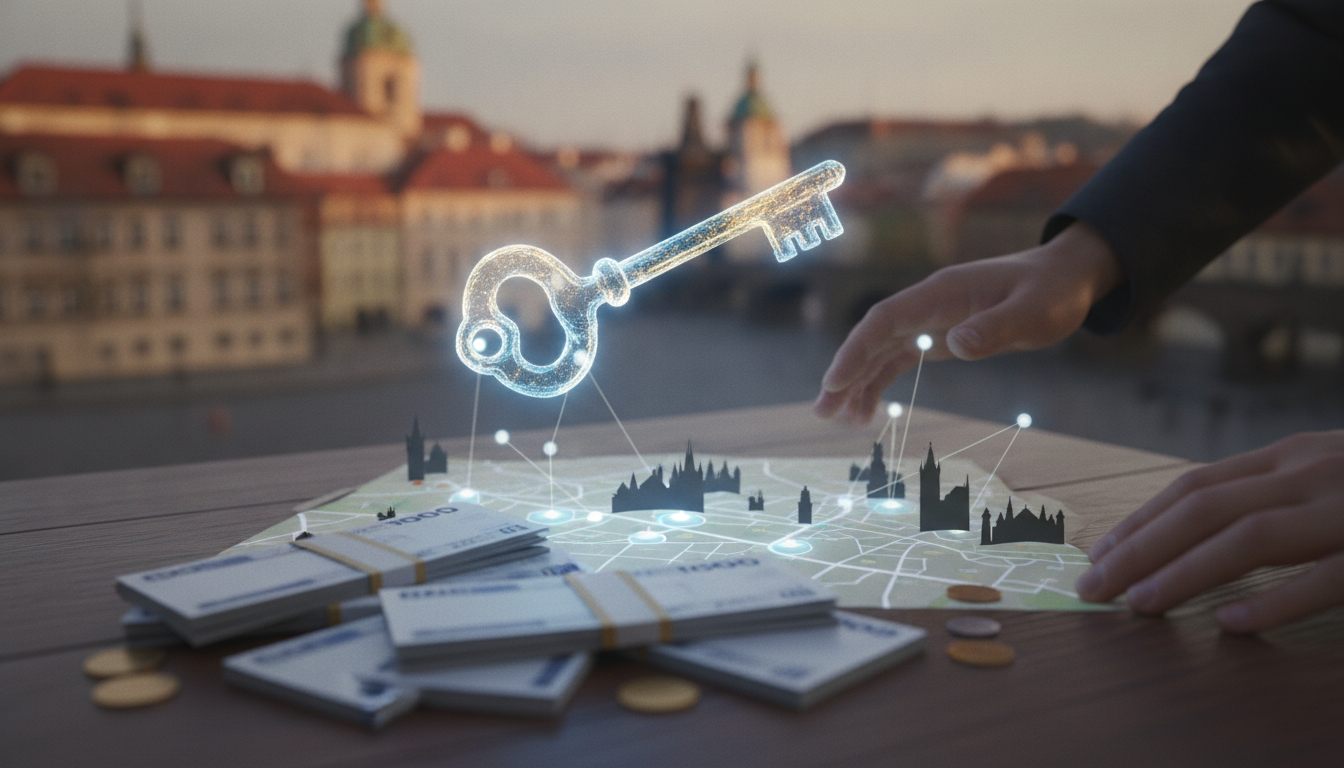
The world of digital banking and payment innovations is rapidly evolving, offering Prague residents unprecedented convenience, security, and efficiency in managing their money. Embracing these technologies can significantly enhance the daily financial experience.
Exploring the features and benefits of mobile banking apps offered by local banks reveals a wealth of functionalities. Most major Czech banks provide sophisticated mobile apps that allow users to check balances, view transaction history, make transfers, pay bills, and even manage investments directly from their smartphone. Features like biometric login (fingerprint or face ID), instant notifications for transactions, and the ability to block/unblock cards are standard, offering enhanced security and control. These apps effectively put a bank branch in your pocket, making financial management accessible 24/7.
Understanding contactless payments, QR code payments, and other digital solutions is essential for modern transactions in Prague. Contactless card payments are ubiquitous, allowing for quick and secure transactions by simply tapping a card or smartphone (via Apple Pay/Google Pay) on a terminal. QR code payments are also gaining traction, particularly for online purchases or peer-to-peer transfers, offering a simple way to initiate payments by scanning a code. These methods reduce the need for cash and provide a faster checkout experience, especially in busy environments.
The rise of peer-to-peer (P2P) payment platforms and their utility in Prague has transformed how individuals send and receive money from friends and family. Apps like Revolut and local bank apps often include P2P functionality, allowing users to send money instantly to other users of the same platform with just a phone number or email address. This is incredibly convenient for splitting bills at restaurants, sharing rent, or repaying small debts without the hassle of bank transfers or cash. It streamlines social finances and makes managing shared expenses much easier.
Security considerations and best practices for digital financial transactions are paramount. While digital payments offer convenience, they also come with risks if not managed carefully. Residents should always use strong, unique passwords for banking apps and online accounts, and enable two-factor authentication whenever possible. Be wary of phishing scams that try to trick you into revealing personal information. Regularly review transaction history for any suspicious activity and report unauthorized transactions immediately. Using secure Wi-Fi networks for banking (avoiding public, unsecured Wi-Fi) and keeping operating systems and apps updated are also crucial steps to protect your digital finances.
# IV. Long-Term Fiscal Planning and Protection
This section extends beyond daily transactions to address broader financial planning, security, and future financial well-being for Prague residents. While daily optimization is crucial, it must be integrated into a larger framework of long-term goals and protective measures.# A. Building Financial Resilience and Savings
Financial resilience is about having the capacity to withstand unexpected financial shocks, while savings provide the foundation for achieving future aspirations. Both are vital for a secure life in Prague.
Strategies for establishing an emergency fund tailored to Prague’s cost of living are a primary step in building financial resilience. An emergency fund should ideally cover 3 to 6 months of essential living expenses. For Prague residents, this means calculating average costs for rent, utilities, groceries, transport, and basic healthcare. This fund should be held in an easily accessible, liquid account, separate from your regular checking account, to ensure it’s available when needed but not easily spent on daily whims. Starting small and consistently contributing a fixed amount each month is more effective than waiting to save a large sum at once.
Setting realistic savings goals for short-term and long-term objectives is essential for motivated saving. Short-term goals might include saving for a new appliance, a holiday, or a language course. Long-term goals could involve homeownership in Prague, funding a child’s education, or retirement. Breaking down large goals into smaller, achievable monthly savings targets makes them less daunting. For instance, if you want to save for a down payment on an apartment, calculate how much you need and divide it by the number of months you plan to save, then set up an automatic transfer to a dedicated savings account. For more information on securing a mortgage in the Czech Republic, consider exploring resources on Prague mortgages.
Exploring different savings vehicles available in the Czech Republic can help maximize returns. Beyond standard savings accounts, which offer low interest rates, residents can consider term deposits (fixed-term deposits) for slightly higher rates, provided they don’t need immediate access to the funds. Investment options like mutual funds or ETFs, while carrying more risk, offer the potential for greater long-term growth. Consulting with a financial advisor can help residents understand these options and choose those that align with their risk tolerance and financial goals. Always ensure you understand the terms, conditions, and potential risks associated with any investment product.
The importance of regular financial reviews for Prague Spending Optimization and long-term goals cannot be overstated. At least once a quarter, residents should sit down to review their budget, spending, savings progress, and overall financial health. This review allows for adjustments based on changing income, expenses, or life circumstances. It’s an opportunity to ensure that financial strategies are still aligned with goals and to identify any new areas for optimization. Consistent review and adaptation are key to sustained financial success and achieving long-term aspirations in Prague.
# B. Protecting Your Finances and Avoiding Pitfalls
Protecting your finances from scams, fraud, and unforeseen events is as crucial as growing them. Being aware of potential pitfalls and taking preventative measures can save Prague residents significant stress and financial loss.
Identifying common financial scams and fraud prevalent in Prague requires vigilance. These can range from phishing emails and SMS messages pretending to be from banks or government agencies, to investment scams promising unrealistic returns, or rental scams targeting new arrivals. Be suspicious of unsolicited requests for personal or financial information, especially those demanding immediate action. Always verify the legitimacy of any communication by contacting the organization directly through official channels, not via the links or numbers provided in the suspicious message.
Best practices for safeguarding personal financial information and online security are essential in the digital age. This includes using strong, unique passwords for all online accounts, enabling two-factor authentication whenever available, and being cautious about sharing personal details on public Wi-Fi networks. Regularly checking bank statements and credit card activity for unauthorized transactions is a critical habit. Shredding sensitive documents before disposal and being mindful of who has access to your physical mail can also prevent identity theft. For more advice on financial security, consider visiting the Czech National Bank’s consumer protection page.
Understanding consumer rights and avenues for financial recourse in the Czech Republic empowers residents to act if they encounter issues. The Czech National Bank (ČNB) and the Czech Trade Inspection Authority (ČOI) are key regulatory bodies that provide oversight and support for consumers in financial matters and general consumer protection, respectively. If you have a dispute with a bank, insurance company, or other financial service provider, you can typically file a complaint with the relevant regulatory body. Being aware of these rights and resources ensures that residents are not left vulnerable in case of unfair practices or disputes. You can also find valuable information on consumer protection from the European Consumer Centre Czech Republic, which offers assistance for cross-border disputes within the EU.
The role of insurance (health, home, liability) in mitigating financial risks is a cornerstone of long-term financial protection. While health insurance is generally mandatory for residents in the Czech Republic, understanding the scope of public versus private options is important for comprehensive coverage. Home insurance protects your property and belongings against damage or theft, while liability insurance can cover costs if you accidentally cause damage or injury to others. Evaluating your personal circumstances and potential risks, and then choosing appropriate insurance policies, provides a crucial safety net, preventing unforeseen events from derailing your financial stability. It’s always wise to compare policies from different providers to find the best coverage at a competitive price.